Senville DIY 18,000 BTU Mini Split: What You Need To Know Before You Buy
Updated
Instant Overview: Is a Senville DIY 18,000 BTU Mini Split Right For You?
The Senville 18,000 BTU mini split air conditioner is an inverter-driven heat pump that provides both cooling and heating for spaces around 750 to 1,000 square feet. Despite showing up in search results alongside terms like "DIY," Senville does not market a true "plug-and-play" DIY mini split system. Its line sets use flare connections that require a vacuum pump, manifold gauges, and a licensed HVAC technician to keep the warranty intact.
That distinction matters. Shoppers searching for "Senville DIY 18000 BTU" often expect a pre charged quick-connect installation kit they can handle with basic hand tools. What they receive instead is a professional-grade system where the outdoor unit ships pre-charged with R454B refrigerant for 25 ft, but the homeowner still needs specialized tooling and, in most cases, paid labor for the refrigerant-side hookup.
The unit itself performs well once installed: whisper-quiet operation as low as 24 dB on the indoor unit, energy efficient consumption via DC inverter technology that reduces energy use by up to 48%, and ENERGY STAR certification. The question is whether the install process fits your skill level and budget.
-
Senville 18k makes sense if you've got trade experience, already own or can rent the HVAC tools, and you're planning to hire a pro for the refrigerant connection while you handle the mounting and electrical yourself.
-
A true DIY kit like Zone Air is a better fit if you want pre charged quick-connect line sets (Zone Air's site), no vacuum pump, and a warranty that stays valid after a homeowner install (Zone-Air.com).
Primary Benefit in One Sentence
For a mid-size room, the Senville 18,000 BTU mini split delivers quiet, year-round heating and cooling at a competitive box price, provided you budget for the professional installation its warranty needs.
With ENERGY STAR certification, the system uses R454B refrigerant to run efficiently, and it works as a full heat pump, so one unit replaces both a window AC and an electric heater. You get those benefits only if the refrigerant circuit is properly evacuated and set up.
Why You'll Like a Senville 18,000 BTU Mini Split (If You're Comfortable With Tools)
Owning an 18000 BTU ductless system means room-by-room temperature control without tearing open walls for ductwork. Homeowners often report that ductless systems are less disruptive to install than central HVAC, and because there are no ducts to leak, you avoid the energy losses associated with leaky ductwork. For bedrooms, garages, bonus rooms, or open-plan living areas, the Senville 18k provides a self-contained comfort zone.
-
You should get a stable temperature in medium to large spaces. With inverter technology, the compressor output keeps going continuously rather than cycling on and off, so the room can stay within a narrow band of your thermostat setting instead of moving between hot and cold.
-
Quiet operation you can sleep through. On the lowest fan speed, Senville mini splits run as low as 24 dB. That is quieter than a whispered conversation. Even on high, the indoor unit is around 50.5 dB.
-
Lower electricity bills. Mini split systems like this one can save you money on electricity compared to electric heaters. The DC Inverter system from Senville can reduce energy use by up to 48% when you compare it to fixed-speed compressors.
-
One system for heating and cooling. Operating as a heat pump, the Senville 18000 BTU unit covers air conditioning in summer and heating in shoulder seasons and mild winters with a single purchase.
-
Flexible placement for awkward spaces. With the indoor unit, you can put it high on a wall. The outdoor unit sits on a pad or bracket outside. A line set up to 50 ft connects the two, and this lets you route around obstacles in additions, converted garages or finished basements.
-
Smart home integration. Smart home integration allows control via Alexa app, so you can turn the system on or adjust the temperature by voice before you walk through the door. A wireless remote control is also included.
-
Dehumidification built in. Senville models provide dehumidification as part of their operation, pulling moisture from the air without a separate dehumidifier.
These benefits depend on correct sizing and proper installation. An undersized or poorly commissioned system will underperform, run up your electricity bill, and risk compressor damage.
What Makes a Senville 18,000 BTU "DIY" Different From a True DIY Mini Split
Most shoppers searching for a DIY mini split expect a system they can install with a drill, a wrench and an afternoon. That means pre charged, sealed quick-connect line sets where the refrigerant never opens to the atmosphere, no vacuum pump, no gauge set and no EPA 608 certification needed.
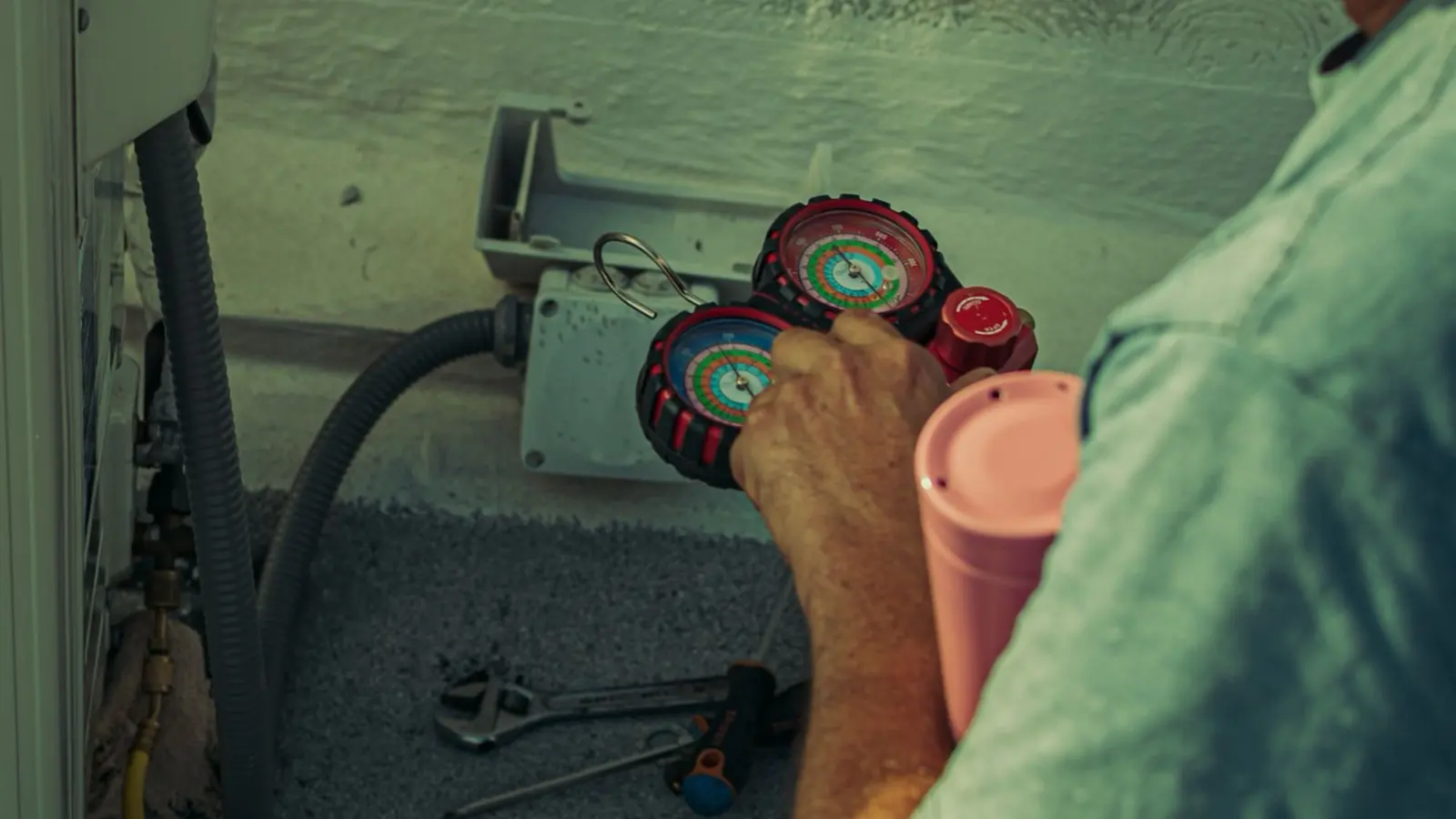
Senville's 18k systems ship differently. The outdoor unit is pre-charged with R454B refrigerant, but the line set uses flare fittings that must be connected, pressure-tested and evacuated on site before the service valves are opened. That evacuation step needs a vacuum pump and manifold gauges, and skipping it lets moisture and air into the refrigerant circuit, which causes ice buildup, reduced efficiency or compressor failure.
Here is what separates Senville from a true DIY system like Zone Air:
-
Connection type. Senville uses flare joints (7/16-inch on the liquid line, 3/4-inch on the suction line for 18k models) that must be torqued to spec and vacuumed. With Zone Air, you get factory-sealed, pre charged quick-connect line sets cut to your exact measurement, so the refrigerant stays sealed from factory to wall.
-
Tools required. A Senville install needs a vacuum pump, manifold gauges, a torque wrench and often a flaring tool. That tooling costs a few hundred dollars if you rent it or buy it. A Zone Air install uses basic hand tools.
-
Warranty position. Senville needs professional installation if you want to keep your warranty coverage. With Zone Air, your warranty (5-year parts, 7-year compressor) stays valid after you install it yourself. There is no registration deadline.
-
Line set customization. Senville offers line sets that come in fixed lengths of 16 ft, 25 ft or 50 ft. For Zone Air, we cut each pre-charged line set to the length your run needs, anywhere from 5 to 75 ft in one continuous run with no field joint. Every extra fitting in a fixed-length kit is just another place it can leak.
These differences translate directly to cost and risk. A homeowner who buys a Senville 18k expecting a simple weekend project often discovers weeks into the process that they need to either spend money on tools they will use once or hire an HVAC tech anyway.
How a Senville 18,000 BTU Mini Split Works (Step by Step)
This is a high-level overview of the user journey from order to comfortable room. It is not a substitute for the manufacturer's installation manual; always read the full documentation before you start.
-
Size the system to the space. Confirm that 18,000 BTU matches your square footage, climate zone, ceiling height and insulation level. Senville rates this unit for roughly 750 to 1,000 square feet. Single-zone mini split systems may not adequately heat or cool divided spaces with multiple closed-off rooms, so check your floor plan before you add to cart.
-
Plan the layout. Choose the wall for the indoor unit, mark the route the line set will take and where it will go through the wall, and map the path the electrical wiring will take to your panel. When you are installing a Senville system, you will typically need a dedicated 208/230V electrical supply. That may mean hiring an electrician to run a new circuit and install a disconnect box.
-
Mount the indoor and outdoor units. Secure the wall bracket for the air handler and hang the indoor unit, then place the outdoor unit on a pad or bracket with the room the manual says it needs. Route the condensate drain so water flows away from the foundation. Installation typically involves physical mounting and refrigerant line connections.
-
Connect and evacuate the refrigerant lines. Attach the flare fittings to the indoor and outdoor units and torque them to spec, then pull a vacuum on the line set with a vacuum pump and gauges. You will need to verify that the system holds vacuum before you open the service valves to release the pre charged refrigerant. This is the step that Senville's warranty terms need a licensed HVAC professional to perform, and Senville systems need professional commissioning for refrigerant handling.
-
Power up and test. Turn on the breaker and run cooling mode, heating mode and fan-only to confirm operation. Then configure Wi-Fi and the Alexa app if your model has smart features, and use the remote control to fine-tune the thermostat settings and the direction of the airflow.
Steps 3 and 4 are where most homeowners choose to bring in a licensed technician. If you skip the vacuum step or fail to torque flare nuts correctly, you risk refrigerant leaks, reduced performance and a voided warranty.
Key Product Details for a Typical Senville 18,000 BTU Mini Split
Specs vary across Senville's range (Leto, AURA, Elite, SENL-18CD). Based on the SENL-18CD model, the figures below show what to expect. Check your specific model's data sheet before you shop.
-
Capacity: 18,000 BTU cooling (range ~4,100 to 19,000 BTU). Heating capacity ~18,800 to 19,400 BTU (range ~6,200 to 20,200 BTU). For spaces around 750 to 1,000 square feet, Senville models are a good fit.
-
Power supply: 208/230V, single phase, 60Hz. It needs a dedicated circuit and disconnect.
-
Refrigerant: The system has pre-charged R454B refrigerant. This is a lower-GWP replacement for R-410A. For line set lengths up to 25 ft, the outdoor unit is pre-charged. Longer runs will need a technician to add refrigerant on site.
-
Operating temperature range: Cooling up to ~122°F outdoor. Heating down to ~5°F on standard Leto models. Senville's AURA model can heat efficiently down to -22°F for buyers in the harshest climates.
-
Noise levels: Indoor unit from 24 dB (low fan) to ~50.5 dB (turbo). Outdoor unit around 56 dB.
-
Dimensions: The indoor unit is about 38 × 8.5 × 12.6 inches and weighs about 24.5 lbs. At about 31.7 × 13 × 21.8 inches and about 72.3 lbs, the outdoor unit is the heavier piece.
-
Included in the box: Indoor air handler, outdoor condenser, wireless remote control, wall bracket, the system includes a complimentary 16ft installation kit (line set, communication cable, drain hose), and user manual.
-
Warranty: Senville offers a 5-year warranty on parts and compressor for the Leto series. The Elite series extends that to 10 years on both. Depending on the model series, the details are different, but professional installation is required to keep the coverage in place. Through its Tech+ program, Senville also has free technical support for up to 10 years.
Who a Senville 18,000 BTU DIY-Style Install Is (and Isn't) For
"DIY" means two different things in the mini split world. It can mean doing every step yourself, from mounting to refrigerant or it can mean handling the prep work (brackets, wiring, line routing) and hiring a pro for the final refrigerant connection. With Senville, only the second approach protects your warranty.
Ideal for:
-
Homeowners with strong mechanical or trade experience who understand how to drill exterior walls, run a dedicated 230V circuit, and work with flare fittings. Having a buddy with HVAC tools helps.
-
People adding climate control to garages, bonus rooms, finished basements, or small commercial spaces that need independent temperature control and don't have existing ductwork.
-
Buyers who want to keep to a budget and save money by handling the mounting and the electrical prep themselves, so that only the refrigerant connection is left to a licensed tech.
Probably not a fit for:
-
First-time DIYers without access to a vacuum pump, gauges, or a willing HVAC technician. The learning curve is steep, and a single mistake on the refrigerant side can cost more than the unit itself.
-
Renters or condo owners who can't cut a hole in an exterior wall or add a circuit to the electrical panel.
-
Anyone who wants a fast, no-vacuum, warranty-safe install. If that's you, a true DIY system like Zone Air is the better fit: it uses pre charged quick-connect line sets, you don't need gauges and the warranty stays valid after homeowner installation.
Cost Breakdown: Senville 18,000 BTU vs True DIY Systems Like Zone Air
What you spend on the mini split box itself is only one part of the total. What you spend on tools, labor and permits is what determines the real cost, and that total is often a surprise to Senville buyers.
-
Equipment price. The Senville SENL-18CD 18k has a low box price when you buy it online, and it comes with a 16 ft line set. Zone Air is often 15 to 30% less than similar MRCOOL systems, and it gives you higher efficiency too.
-
Tools and install materials (Senville). If you don't already own HVAC tools, expect to spend a few hundred dollars on a vacuum pump, manifold gauges, a torque wrench set and nitrogen for pressure testing. You'll also need line set covers, a condenser pad, an electrical disconnect and other hardware. Most homeowners have only used these tools once.
-
Tools and install materials (Zone Air). With the pre charged quick-connect line sets, there is no need for a vacuum pump, gauge set or EPA 608 certification. You just need basic hand tools, a drill with a hole saw, and standard electrical supplies.
-
Labor (Senville). Hiring an HVAC pro to connect, evacuate and commission the refrigerant circuit is a separate service call, and the cost depends on your area. You may also need an electrician for the 230V circuit and disconnect, so that adds another bill.
-
Labor (Zone Air). There's no refrigerant-side labor needed. Depending on your comfort level and local code, an electrician for the dedicated circuit is optional, but that's the only trade you might hire.
-
Warranty value. Replacing a Senville compressor when you are out of warranty costs a lot of money, and if you install a Senville yourself without having a licensed technician sign off on the refrigerant work, you void the warranty. Zone Air's 5-year parts and 7-year compressor warranty doesn't need professional installation, so the coverage stays in place no matter who does the job.
All-in, the gap between box prices narrows once tools and labor are added to the Senville purchase price.
Pros and Cons of Choosing a Senville 18,000 BTU for Your DIY Project
No system is perfect. Here are the trade-offs to compare before you order.
Pros:
-
Competitive box price; often lower than big-box store brands at the same 18000 BTU capacity.
-
Running at about 24 dB, the indoor unit stays quiet, and the noise from the outdoor side stays at a reasonable level at around 56 dB.
-
Multiple series to choose from (Leto, AURA, Elite) with different feature sets, including smart controls and low-ambient heating options.
-
Widely available online with years of owner feedback and a lot of review data to read through.
-
Senville lists ENERGY STAR certification, with SEER2 ratings that are around 19 to 21 depending on the model.
Cons:
-
Flare connections and mandatory vacuum evacuation raise install complexity beyond what most homeowners can handle alone.
-
DIY installation without a licensed technician voids the warranty, turning a "savings" project into a risk.
-
The cost of HVAC tools or professional labor is not obvious at purchase and can add substantially to the real price.
-
Standard Senville models (Leto) heat only down to about 5°F. Zone Air heats down to -13°F across its entire lineup, making it more capable in cold climates without stepping up to the bigger AURA series.
-
The 16 ft included line set is short; longer runs require purchasing additional line sets and potentially adding refrigerant on site.
When a True DIY System Like Zone Air Is a Better Option
Many shoppers searching for "Senville DIY 18000 BTU" are actually looking for a mini split they can install themselves without specialized tools or a contractor. If that describes you, Zone Air is engineered for exactly that use case.
-
Pre charged quick-connect line sets cut to your exact measurement (5 to 75 ft in one continuous run) so there is no vacuum pump, no gauge set and no EPA 608 certification required. The refrigerant is sealed at the factory from the shop floor all the way to your wall.
-
Efficiency up to 24 SEER2 on 230V systems and 23 SEER2 on 115V models (23 SEER2 on the 18K). The Senville SENL-18CD posts a SEER2 of 19.2. That gap means lower cooling bills with Zone Air.
-
Cold-climate heating is available down to -13°F and cooling up to 131°F. Senville's standard line stops heating at 5°F, and you need the AURA model if you want to reach -22°F. With every system, Zone Air covers -13°F with no extra cost.
-
Warranty that supports DIY installation. Zone Air offers 5-year parts coverage and 7-year compressor coverage. There is no registration deadline. Homeowner installation does not void the warranty. Senville's warranty needs professional installation.
-
Mix indoor unit styles on one outdoor unit. Zone Air lets you run wall-mount, ceiling cassette and single-room concealed ducted air handlers on the same multi-zone condenser. You can add zones later by connecting a new indoor unit and pre charged line set to a spare port, no vacuum pump needed.
-
115V plug-in option. With the optional cord kit, Zone Air's 9K and 12K 115V models can plug into a dedicated 15A outlet where local code allows. Zone Air has called these the easiest systems to install on the market.
-
Final assembly and inspection in the USA. Zone Air systems undergo final assembly, testing, and inspection in the USA from globally-sourced components, and every unit ships pre-inspected.
-
Direct support from the people who built it. Zone Air sells direct, so the sale, warranty, parts, returns and trades all go through one company, with live technical support 8 AM to 6 PM MT, an install video library, and a written DIY manual. Customers have given an average of 4.8 out of 5, and people who bought one often mention that the support team was helpful during installs and with warranty questions.
If you want a DIY mini split that actually lives up to the "DIY" label, Zone Air removes the barriers that make Senville's "DIY" label a stretch.
Frequently Asked Questions About Senville DIY 18,000 BTU Mini Splits
These are the questions homeowners ask most often before clicking "Buy Now."
Can I install a Senville 18,000 BTU mini split completely by myself? You can physically mount the indoor and outdoor units, run the line set and wire the circuit yourself. But the refrigerant connection, vacuum evacuation and charge release have to be done by a licensed HVAC professional if you want to keep your warranty coverage. If you do those steps yourself, Senville considers the warranty void. Some homeowners accept that risk, and others avoid it by choosing a system like Zone Air where homeowner installation is covered under warranty.
Do I need a vacuum pump and gauges? Yes. Because Senville uses flare connections, the line set must be evacuated to remove air and moisture before the service valves are opened. Skipping this step introduces contaminants into the refrigerant circuit, which causes ice buildup, reduced efficiency, and potential compressor failure. The vacuum pump and gauges cost a few hundred dollars to buy or rent. Pre charged quick-connect systems like Zone Air eliminate this requirement entirely.
Will a Senville 18k heat my space in winter? The standard Leto series heats down to about 5°F outdoor temperature. Below that, heating capacity drops off and you will need supplemental heat. Senville's AURA model can heat efficiently down to -22°F, but it costs more. For comparison, every Zone Air system heats down to -13°F without stepping up to a premium tier.
What size room is 18,000 BTU good for? Senville rates the 18,000 BTU unit for approximately 750 to 1,000 square feet, depending on insulation quality, ceiling height, window area, and your climate zone. A poorly insulated room with large windows in a hot or cold climate will need more capacity per square foot than a well-insulated home in a mild zone. A Manual J load calculation gives the most accurate answer.
Is 120V available, or do I need 230V? Most 18,000 BTU mini splits, including every Senville 18k model, need 208/230V single-phase power. That means you'll need a dedicated circuit and usually a new breaker in your electrical panel. If you want a 115V plug-in option, Zone Air offers 9K and 12K models that run on a dedicated 15A circuit.
What happens if I DIY and something goes wrong? If you self-install a Senville and develop a refrigerant leak, compressor failure or performance issue, Senville can deny the warranty claim because professional installation is required to maintain coverage. A compressor replacement out of warranty is a major expense. Many buyers who thought they would save money on a "DIY" Senville install end up spending more than they would have with a true DIY system that protects the warranty regardless of who installs it.
Ready to Choose Your 18,000 BTU DIY-Friendly System?
With a price that is close to other options, the Senville 18,000 BTU mini split is a capable heat pump that runs quietly, uses energy well and does not cost as much as some other units. It is not, however, a true DIY system. With flare connections, a vacuum evacuation that is mandatory, and a warranty that needs professional installation, you get cost and complexity that the box price does not reveal.
-
Choose a Senville 18,000 BTU if you value the lower upfront equipment cost and already plan to hire a local HVAC pro for the refrigerant hookup.
-
Choose a true DIY system like Zone Air if you want pre charged quick-connect line sets sized to your exact run, no vacuum pump, efficiency up to 24 SEER2, heating down to -13°F, and a 5-year parts / 7-year compressor warranty that fully supports homeowner installation.
Before you order either system, check your room's load calculation, confirm your electrical panel has capacity for a dedicated 230V circuit, and verify local permit requirements. If you lean toward an easier DIY install, Zone Air's live support team (8 AM to 6 PM MT) can walk you through sizing, layout and line set length before you add anything to your cart.